Baby Elephant in Jungle Redwork: A Craft Fair Review
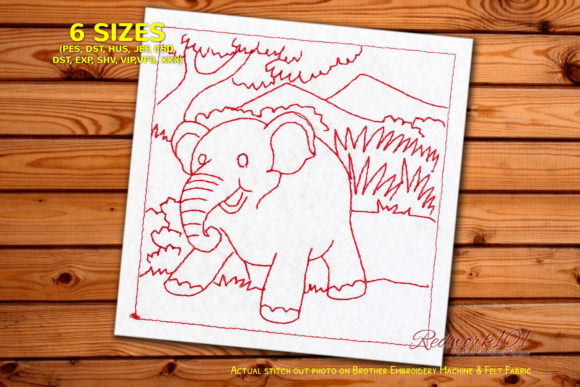
As an embroidery designer preparing for a busy weekend at the local artisan market, my eyes are always scanning for designs that stop customers in their tracks. When I pulled up the Baby Elephant in Jungle Redwork by Redwork101, my first instinct was to evaluate its potential as a high-converting craft fair product. In the world of Wild Animals themed Embroidery, there is a fine line between generic clipart and a design that feels like a premium handmade product. This specific design leans heavily into the "cutesy" aesthetic mentioned in its description, which is a massive advantage for booth traffic. Parents, grandparents, and nature lovers are drawn to soft, approachable animal motifs, and a redwork style offers a timeless, rustic charm that fits perfectly with current farmhouse and boutique trends.
First Impressions and Visual Appeal
The immediate visual impact of Baby Elephant in Jungle Redwork is one of simplicity and warmth. Redwork, traditionally done in a single color thread, relies entirely on line weight and spacing to create definition. For a craft fair table, this minimalism is a strength. It reads clearly from three feet away, which is crucial when a customer is walking past your booth. Unlike dense, satin-stitch logos that can look heavy on light fabrics, this design feels airy and decorative. It strikes a balance between modern minimalism and traditional folk art. When placed on a natural linen tote or a cream-colored tea towel, the single-color stitching creates a sophisticated contrast that elevates the perceived value of the item without looking mass-produced.
Product Versatility for Market Sales
In planning my display, I am constantly asking: where does this design shine brightest? The Baby Elephant in Jungle Redwork is incredibly versatile. Here is how I see it performing across different SKUs:
- Tote Bags and Market Bags: This is the strongest contender. A large tote bag design featuring this elephant on the front pocket or centered on the body sells itself to eco-conscious shoppers. The open nature of redwork means it won't feel stiff or uncomfortable against the hip when carried.
- Kitchen Linens: For tea towel embroidery, the scale of this design is ideal. It works beautifully as a focal point on a flour sack towel. The "nature lover" aspect of the description suggests it would pair well with botanical elements if I were to add custom lettering nearby.
- Aprons: An apron embroidery placement on the bib or lower skirt adds a whimsical touch. Since redwork uses fewer thread changes, it is cost-effective for batch-producing aprons for the holiday season.
- Patches and Pouches: If stitched on twill or canvas, this makes an adorable embroidered patch that can be sold separately or applied to denim jackets. Small fabric pouches for cosmetics or pencils also benefit from the clear lines of the elephant motif.
Production Practicality and Batch Efficiency
For an Etsy seller or boutique maker, time is money. One of the most appealing aspects of Baby Elephant in Jungle Redwork is its likely efficiency. Redwork designs typically have lower stitch density compared to fill-heavy designs. This means less thread consumption, reduced risk of bird nesting, and faster cycle times on the machine. When preparing for a fair, being able to run multiple hoops simultaneously is a game-changer. If this machine embroidery design holds its integrity at various sizes, it becomes a repeatable asset for creating a cohesive collection of small shop product items.
However, practical judgment requires looking at the limitations. The description notes that the design is "cutesy," which often implies rounded lines and potentially small details like eyelashes or trunk curls. When scaling this down for a cap or a small pouch, one must be wary of losing clarity. Tiny details in redwork can vanish if the stitch length is too short or if the fabric texture is too coarse. Therefore, while it excels on flat, smooth surfaces like tote bags, extra caution is needed for textured towels or curved cap surfaces.
Critical Considerations for Execution
To ensure every finished product meets professional standards, there are several technical factors to address before hitting the start button. Since the specific embroidery file details like exact stitch count or recommended hoop size are not explicitly detailed in the short description provided, it is vital to check the download package thoroughly. Do not assume the default settings will work for every application.
Here are my essential notes for production:
- Fabric and Stabilizer Selection: Redwork shows every flaw. On thick fabrics like terrycloth towels, the stitches might sink in. Use a cut-away stabilizer rather than tear-away to prevent distortion over time. For dark fabrics, remember that redwork relies on contrast; a red thread on navy blue might not pop enough unless you adjust the thread colors to a brighter shade or use a lighter outline.
- Testing on Scraps: Always stitch a test run on the exact same fabric weight you intend to sell. Check if the elephant's trunk or ears bridge properly without gaps. If the design looks pixelated on the test, you may need to adjust the pull compensation or avoid using it on that specific material.
- Commercial Licensing: Before listing these items as commercial embroidery products, confirm the license terms included with the digital embroidery file. Some designers allow unlimited physical sales but restrict digital redistribution. Ensure you are compliant to protect your business.
- Photography and Mockups: For online listings, this design photographs exceptionally well due to its clean lines. Create a printable mockup or take high-resolution photos of a real sample to show the texture of the stitching. Highlighting the "hand-stitched" look (even though it's machine-made) increases buyer engagement.
Maximizing Buyer Engagement
Ultimately, the success of Baby Elephant in Jungle Redwork at a craft fair comes down to emotional connection. The subject matter—a baby animal in a jungle setting—triggers an immediate nurturing response. It appeals to the gift-giver looking for something unique for a baby shower, a child's birthday, or a nursery decoration. By positioning this design on high-quality blanks, such as organic cotton totes or linen aprons, you transform a simple design asset into a premium brand experience.
The consistency of using this motif across different products strengthens your booth display. Imagine a table featuring a tote bag, a matching tea towel, and a small pouch, all featuring the same elephant. This visual repetition creates a professional brand identity that tells customers you are a serious creator. It invites them to imagine the design in their own homes. While the "Stitch Box" mentioned in the original description is optional and likely a framing element, focusing on the elephant itself allows for more flexible placement options on various garments and home goods.
In conclusion, Baby Elephant in Jungle Redwork is a strategic choice for the handmade entrepreneur. It balances aesthetic appeal with production efficiency. Whether you are an experienced Etsy seller expanding your catalog or a newcomer setting up your first booth, this design offers the versatility and charm needed to stand out in a crowded market. Just remember to respect the technical limits of redwork, choose your fabrics wisely, and let the cute factor of this wild animal do the heavy lifting in attracting customers to your table.