Baby Carriage Sketch: A Designer's Review for Real Projects
As an embroidery designer who spends countless hours digitizing and stitching for clients, I am always on the lookout for machine embroidery design files that balance aesthetic charm with technical reliability. Recently, I came across the Baby Carriage Sketch on Creative Fabrica, a piece categorized under Transportation that immediately caught my eye for its potential in nursery decor and baby shower gifts. In this review, I will break down whether this digital embroidery file is worth adding to your library for commercial use or personal crafting.
First Impressions: Visual Mood and Stitching Personality
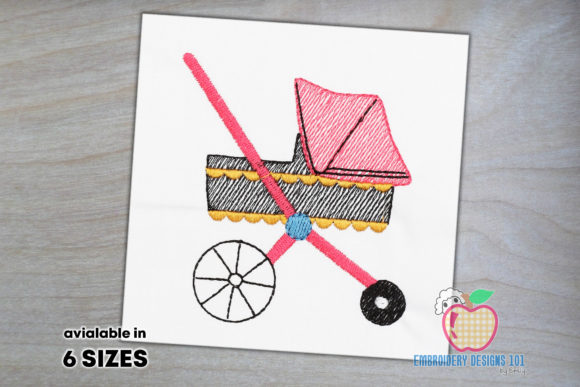
The moment you preview the Baby Carriage Sketch, the first thing that stands out is its delicate, hand-drawn aesthetic. Unlike heavy, blocky designs often found in standard libraries, this piece leans into a softer, sketch-like quality. It feels vintage yet modern, making it incredibly versatile. The line work suggests a mix of running stitch for outlines and potentially lighter fill stitch areas to give the carriage body some substance without overwhelming the fabric.
For designers, the "sketch" aspect is crucial. It implies a lower stitch density compared to fully saturated logos, which is excellent for maintaining the drape of lightweight fabrics like muslin or linen. The decorative appeal here is high; it doesn't just look like a generic icon but rather like a custom illustration. This kind of visual mood naturally fits projects where subtlety is key, such as heirloom baby blankets, boutique clothing tags, or personalized tote bags for new mothers.
Performance in Real-World Embroidery Applications
When considering this design for a real customer order, versatility is paramount. The Baby Carriage Sketch shines in several specific applications within the realm of commercial embroidery and handmade goods:
- Custom Apparel: Perfect for the left chest of a baby onesie or the sleeve of a parent's matching sweatshirt. The scale appears appropriate for these smaller canvases.
- Tote Bag Design: This is likely the strongest use case. A canvas tote featuring this sketch makes for an adorable diaper bag or a gift bag for a baby shower.
- Nursery Decor: Imagine this stitched onto a pillow cover or framed as wall art. The transportation theme adds a playful touch to a child's room without being too loud.
- Handmade Gifts: For Etsy sellers, this design elevates a simple kitchen towel or apron into a thoughtful, personalized gift.
- Embroidered Patch: If hooped correctly on stable backing, this could serve as a charming iron-on or sew-on patch for denim jackets or diaper bags.
The description notes that it comes with multiple embroidery file formats, which is a baseline requirement for any professional using various machine brands. However, the true test lies in how those files translate to physical thread.
Practical Considerations for the Professional Stitcher
Before committing to a production run, there are several technical factors to evaluate with a design like Baby Carriage Sketch. Since this is a sketch-style image, it likely relies on fine details. Here is what you need to watch out for:
Fabric Selection and Stabilizer
Sketch designs can sometimes get lost on textured fabrics. If you are stitching on a Terry cloth towel or a thick sweatshirt, ensure your thread colors have enough contrast against the background. For stretchy fabrics like those used in t-shirts or baby grow suits, using a high-quality cut-away stabilizer is non-negotiable to prevent the fine lines from distorting over time. On woven fabrics like linen or cotton twill, a tear-away might suffice, but always test first.
Hoop Size and Detail Integrity
One of the most critical checks is the hoop size. While the product description mentions it fits on bags and shirts, you must verify the actual dimensions in your software. If the design is too small, the tiny lettering (if any) or the wheels of the carriage might turn into a blob of thread. Conversely, if you enlarge it too much for a large tote, you risk seeing individual stitches where smooth lines should be. Always run a test stitch-out on scrap fabric of the same weight as your final material.
Curved Surfaces and Caps
Using this on a cap requires caution. The curved surface of a baseball cap can distort linear designs. If the Baby Carriage Sketch has long horizontal lines representing the carriage frame, they may bow incorrectly on a structured cap. It is generally safer to stick to flat surfaces like aprons, pillow covers, or flat patches for this specific motif unless you have experience adjusting digitizing for curved seams.
Enhancing Product Value and Brand Consistency
In the competitive market of handmade products, the choice of design directly impacts buyer trust and perceived value. A generic, clip-art style carriage might make a product feel cheap. However, a well-executed sketch design like this adds a layer of sophistication. It suggests that the creator cares about aesthetics and detail.
For small business owners and creative entrepreneurs, consistency is key. If your brand focuses on soft, neutral, or vintage-inspired baby items, this design aligns perfectly with that visual identity. It enhances your printable mockup presentations because the line art photographs beautifully, often requiring less post-processing than heavy, shiny satin stitch designs. When customers see a clean, artistic representation of a baby carriage on a finished product, it increases the "giftability" factor, making it an easy sell during peak seasons like holidays or baby showers.
Final Verdict and Usage Tips
The Baby Carriage Sketch from Creative Fabrica appears to be a solid addition to a designer's arsenal, particularly for those specializing in baby and nursery themes. Its strength lies in its adaptability across different finished product types, from wearable custom apparel to home decor.
However, before you download and start stitching for profit, keep these final checkpoints in mind:
- Check the License: Always review the licensing terms on the Creative Fabrica product page. Ensure that the license allows for commercial use if you plan to sell the embroidered items.
- Verify File Details: Since specific stitch counts and exact hoop requirements were not detailed in the brief description, open the files in your embroidery software immediately after downloading. Check the color sequence and trim jumps.
- Thread Contrast: Play with thread choices. While pastels are obvious, try a monochromatic look with white-on-white or cream-on-beige for a subtle, high-end texture.
- Wash Testing: If selling items that need frequent washing (like bibs or burp cloths), wash your test sample multiple times to ensure the sketch lines do not fray or pull.
In conclusion, if you are looking for a design that brings a touch of whimsical elegance to your Transportation themed collection, this embroidery asset is worth exploring. It offers the potential to create unique, heartfelt items that resonate with customers looking for something more special than mass-produced goods. Just remember, the secret to a successful project always lies in the preparation: test your stabilizer, check your tension, and let the quality of your stitching do the talking.